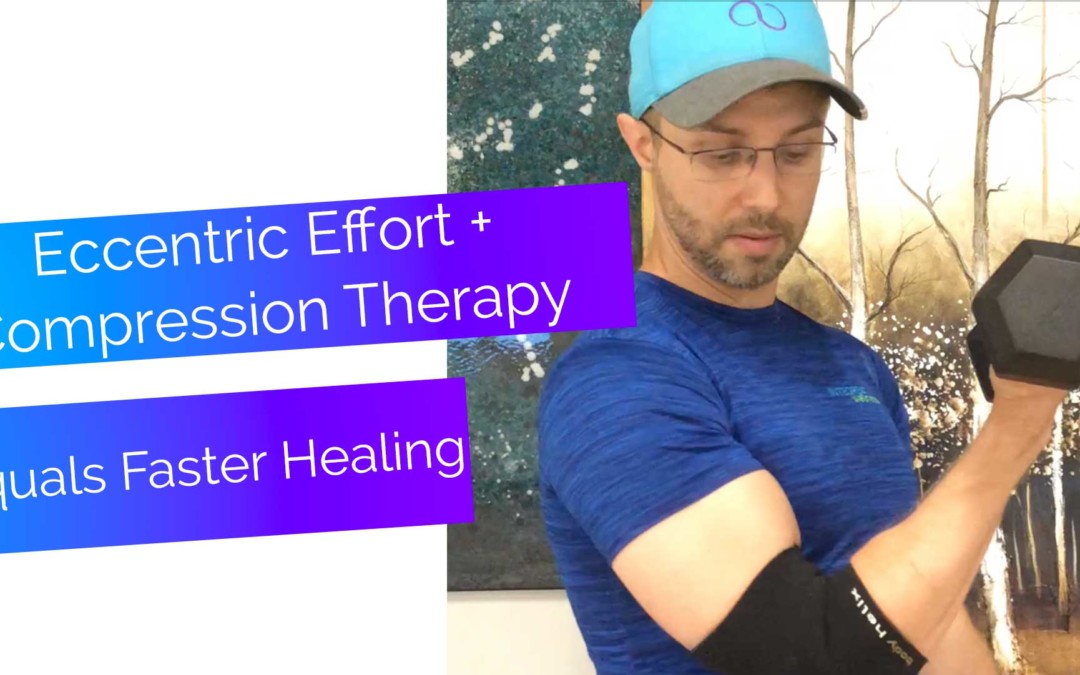
Eccentric Effort
Hello! So today I’m going to explain the difference between concentric and eccentric motion. That’s going to be particularly important today, because I’m going to explain how it can help you heal from injuries.
Contrary to what you might think – it’s actually a little bit counterintuitive – your muscles are actually stronger when they’re getting longer under tension, which means that your muscles are stronger during the eccentric phase of motion. So again: Your muscles are stronger here when the muscles are getting longer under tension.
When it gets inflamed, you can assist your elbow into flexion, and then very slowly and gradually work against that weight (and it’s a light weight). The process of gradually lengthening the muscle helps it get stronger, and helps it heal a little faster.
Compression Therapy
Something else that is helpful for both reducing pain from injuries and speeding recovery is compression therapy. By putting the two together, you can greatly improve your healing. I’ve had really great results using the Body Helix arm sleeve. It gives very consistent, firm support without feeling constricting. The sleeve holds its shape, and it fits true to size. It doesn’t smell strange, and is made to withstand lots of use.
The idea behind compression therapy is that the pressure serves multiple healing purposes simultaneously. It literally holds the injured tissues together, giving them support and reinforcing proper alignment. In addition to this, compression slows down the flow of blood. This is important, because connective tissues don’t get much of a blood supply, which is the reason tendons and ligaments heal so slowly. By exposing the inflamed connective tissue to more blood for longer, the body has a better opportunity to take nutrients and other substances to the injury while also allowing more time for waste products to be taken away. Once it’s time to remove the compression, fresh blood floods into the tissues. This washes out all the dead cells and waste products that have accumulated at the site.
Recent Posts
Exercise Therapy Specialist | Post-PT Recovery Care
When Insurance Runs Out: How an Exercise Therapy Specialist Keeps Patients Moving The Insurance Gap When insurance coverage ends, recovery shouldn’t stop. Most patients are discharged from physical therapy before their recovery is complete. The problem isn’t the...

Exercise Physiologist vs Personal Trainer | What’s the Difference?
Exercise Physiologist vs Personal Trainer: What’s the Difference—And Which One Do You Need? If you’ve been searching for help with injury recovery, chronic pain, or improving your overall health, you might’ve come across the term exercise physiologist—even if...

What to Expect from a Personal Trainer
Personal training is not about perfection—it’s about getting started. A good trainer meets you where you are. They’ll modify movements, scale intensity, and guide you with patience. Worried about being judged? You won’t be. Trainers work with all types of people: beginners, older adults, people with injuries, and those just starting their fitness journey. Everyone starts somewhere. Your first session is a fresh start, not a finish line.